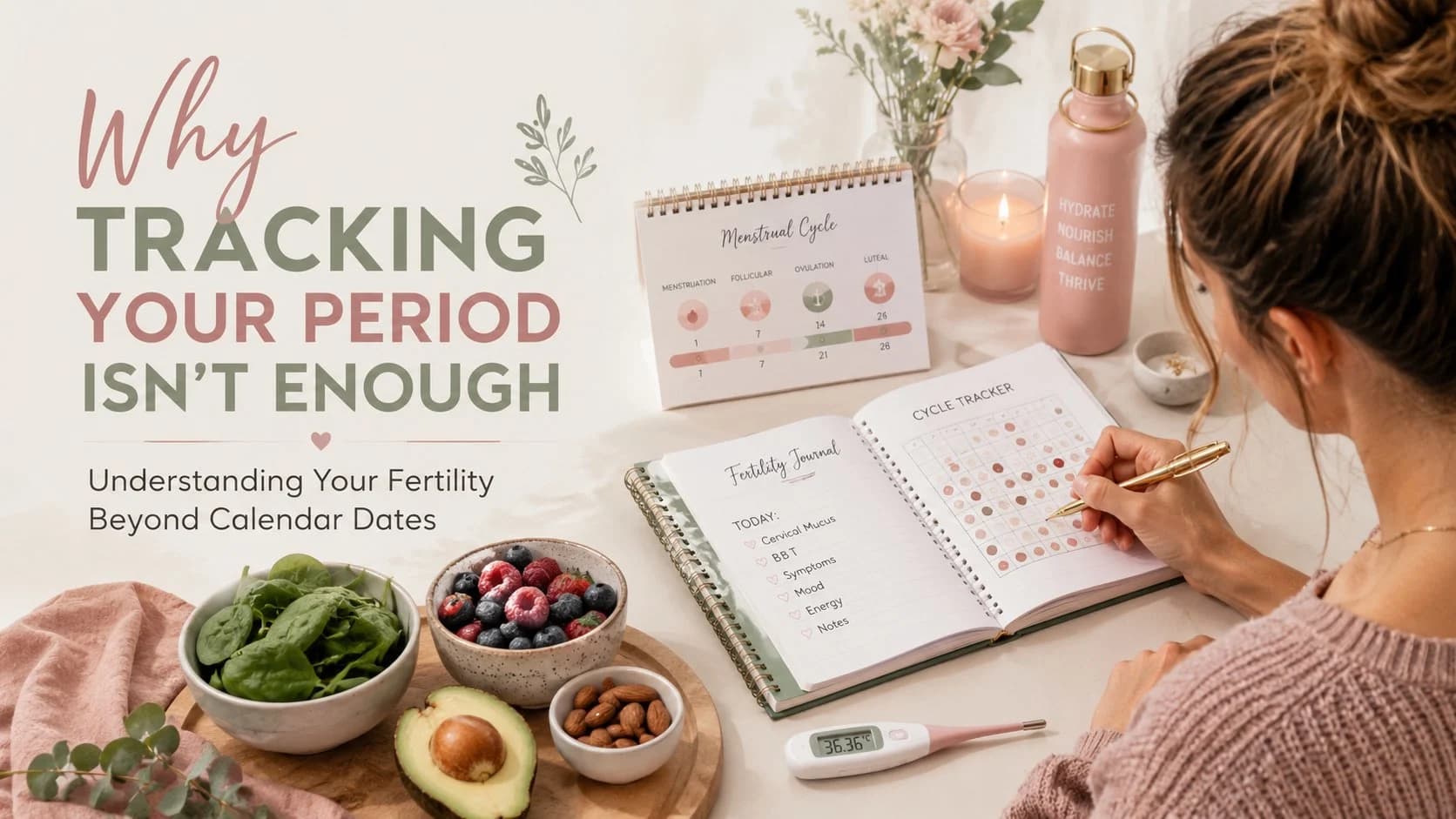
Why Tracking Your Period Isn't Enough: Understanding Your Fertility Beyond Calendar Dates
If you're trying to conceive (TTC) or simply want to understand your reproductive health better, tracking your period is often the first step. Period-tracking apps have made it easier than ever to monitor cycle dates and predict upcoming periods.
However, your menstrual cycle is much more than the days you bleed.
While period tracking provides useful information, it doesn't always tell you when you're ovulating, how your hormones are changing, or when your most fertile days occur. To gain a deeper understanding of your fertility, it's helpful to look beyond calendar dates and pay attention to your body's natural signals.
What Period Tracking Can Tell You
Tracking your period can help you:
Estimate cycle length
Predict future periods
Identify irregular cycles
Monitor flow patterns
Track PMS symptoms
These insights can be valuable, especially if you're just beginning your fertility awareness journey.
However, period tracking alone cannot confirm whether ovulation occurred or accurately identify your fertile window every month.
Why Ovulation Matters More Than Your Period
Pregnancy occurs when sperm meets an egg during your fertile window.
Many fertility apps estimate ovulation based on average cycle lengths, often assuming ovulation happens around Day 14. In reality, ovulation timing can vary significantly from person to person and even from cycle to cycle.
Factors that may influence ovulation include:
Stress
Sleep quality
Travel
Illness
Lifestyle changes
Hormonal fluctuations
This means that relying solely on predicted dates may not reflect what's actually happening in your body.
Sign #1: Cervical Mucus Changes
Cervical mucus is one of the most helpful fertility signs to observe.
As ovulation approaches, estrogen levels rise, causing cervical mucus to become:
Clear
Stretchy
Slippery
Similar to raw egg whites
These changes help sperm travel more easily and often indicate that your fertile window is approaching.
Tracking cervical mucus can provide real-time fertility information that a calendar alone cannot.
Sign #2: Basal Body Temperature (BBT)
Basal Body Temperature (BBT) is your body's resting temperature measured immediately upon waking.
After ovulation, progesterone levels increase and typically cause a slight rise in body temperature.
Tracking BBT over several cycles may help you:
Confirm ovulation
Identify cycle patterns
Better understand hormonal changes
Improve fertility awareness
While BBT doesn't predict ovulation in advance, it can help confirm that ovulation has occurred.
Sign #3: Ovulation Symptoms
Some women notice physical changes around ovulation, including:
Mild pelvic discomfort
Increased libido
Breast tenderness
Increased energy
Changes in mood
Heightened sense of smell
These symptoms vary from person to person but can provide additional clues about fertility timing.
Sign #4: Hormonal Patterns Throughout the Cycle
Your cycle influences much more than your period.
Hormonal fluctuations throughout the month can affect:
Mood
Energy levels
Appetite
Sleep quality
Exercise performance
Paying attention to these patterns can help you better understand your body's natural rhythm and support cycle awareness.
Sign #5: Lifestyle Factors Matter Too
Lifestyle habits can influence overall reproductive health and cycle regularity.
Factors worth tracking include:
Sleep
Stress
Nutrition
Hydration
Physical activity
Combining these observations with fertility signs may provide a more complete picture of your reproductive health.
Helpful Tools for Fertility Tracking
If you're looking to gain deeper insights into your cycle, the following tools may support your fertility awareness journey.
Basal Body Thermometer
A basal body thermometer provides more precise readings than a standard thermometer and can help you identify post-ovulation temperature shifts.
Recommended Product:
Shop Basal Body Thermometer
Fertility Tracking Journal
A dedicated fertility journal can help you record cycle dates, symptoms, cervical mucus observations, temperature readings, and lifestyle factors in one place.
Recommended Product:
Shop Fertility Journal
Ovulation Prediction Kit (OPK)
Ovulation predictor kits detect the luteinizing hormone (LH) surge that typically occurs before ovulation, helping many women better identify their fertile window.
Recommended Product:
Shop Ovulation Prediction Kit
Reusable Water Bottle
Staying hydrated supports overall wellness and may help maintain healthy cervical mucus production.
Recommended Product:
Shop Reusable Water Bottle
Fertility-Friendly Cookbook
Nutrition plays an important role in preconception wellness. A fertility-focused cookbook can provide meal inspiration and healthy recipe ideas.
Recommended Product:
Shop Fertility-Friendly Cookbook
Glass Food Storage Containers
Many people choose glass containers as part of a low-plastic kitchen routine and for convenient meal preparation.
Recommended Product:
Shop Glass Food Storage Containers
When to Consider Professional Guidance
If you're experiencing:
Irregular cycles
Absent periods
Difficulty conceiving
Significant cycle changes
Unusual symptoms
Consider speaking with a qualified healthcare professional for personalized advice and evaluation.
Final Thoughts
Tracking your period is an excellent starting point, but it only tells part of the fertility story.
By observing cervical mucus, basal body temperature, ovulation symptoms, lifestyle habits, and hormonal patterns, you can gain a more complete understanding of your cycle and fertility.
Every cycle provides valuable information. Learning to recognize your body's natural signals can help you feel more informed, confident, and empowered on your fertility journey.