The Stress-Fertility Connection: Is Cortisol Stealing Your Cycle?
Modern life keeps many women in a constant state of pressure.
Deadlines. Overthinking. Poor sleep. Endless scrolling. Emotional stress. Intense workouts. Trying to “do everything right.”
And sometimes, the body quietly responds in ways we don’t immediately connect to stress at all.
Your periods become irregular. Ovulation feels delayed. PMS worsens. You notice spotting before your cycle. Your hair feels thinner. Your skin looks tired. Energy drops.
It can feel confusing — especially when you’re eating healthy, taking supplements, and genuinely trying to take care of yourself.
But your nervous system may be telling a different story.
Your Body Prioritizes Survival Before Fertility
The female body is incredibly intelligent.
When your brain senses chronic stress, it activates your stress response system and releases cortisol — the body’s main stress hormone.
This response was originally designed to protect us from danger.
Thousands of years ago, stress meant physical survival:
escaping predators
finding food
surviving harsh environments
Today, the body often reacts similarly to:
emotional overwhelm
work pressure
financial anxiety
sleep deprivation
relationship stress
overexercising
constant stimulation
To your nervous system, prolonged stress can signal:
“This may not be a safe time for reproduction.”
As a result, the body may temporarily shift energy away from fertility functions and toward survival.
The “Pregnenolone Steal” Explained Simply
One of the most interesting parts of the stress-fertility connection is something often called the “Pregnenolone Steal.”
In simple terms, your body uses shared hormone-building resources to create both:
Cortisol (stress hormone)
Progesterone (important fertility hormone)
When stress becomes chronic, the body may prioritize cortisol production over reproductive hormone support.
This can contribute to:
delayed ovulation
spotting before periods
irregular cycles
shorter luteal phases
increased PMS symptoms
It doesn’t mean stress automatically causes infertility. Hormones are complex, and many factors affect reproductive health.
But chronic stress can absolutely influence the delicate hormonal communication involved in ovulation and menstrual cycle balance.
Signs Stress May Be Affecting Your Cycle
Every woman’s body responds differently, but some common signs may include:
1. Spotting Before Your Period
Light spotting before menstruation can sometimes be associated with lower progesterone support during the luteal phase.
2. Delayed Ovulation
Stress may signal the body to postpone ovulation temporarily.
This can make cycles feel:
longer
inconsistent
unpredictable
3. Shorter Luteal Phase
The luteal phase is the time between ovulation and menstruation.
If it becomes too short, implantation may become more difficult.
4. Missed Ovulation (Anovulation)
Some cycles may occur without ovulation entirely, especially during periods of intense physical or emotional stress.
5. Worsened PMS
Mood swings, fatigue, bloating, irritability, and headaches may feel stronger when stress hormones remain elevated.
6. Hair Thinning & Skin Changes
High stress can also influence:
inflammation
sleep quality
circulation
scalp health
skin barrier function
Many women notice dull skin, breakouts, or increased shedding during stressful periods.
Your Nervous System Matters More Than You Think
Fertility isn’t only about hormones.
It’s also deeply connected to the nervous system.
When the body stays stuck in “fight or flight” mode, it becomes harder to fully shift into the “rest and digest” state where repair, healing, and reproductive balance thrive.
This is why nervous system regulation practices can feel so powerful.
Not because they are “magic fixes,” but because they help communicate safety to the body.
And safety matters for hormone balance.
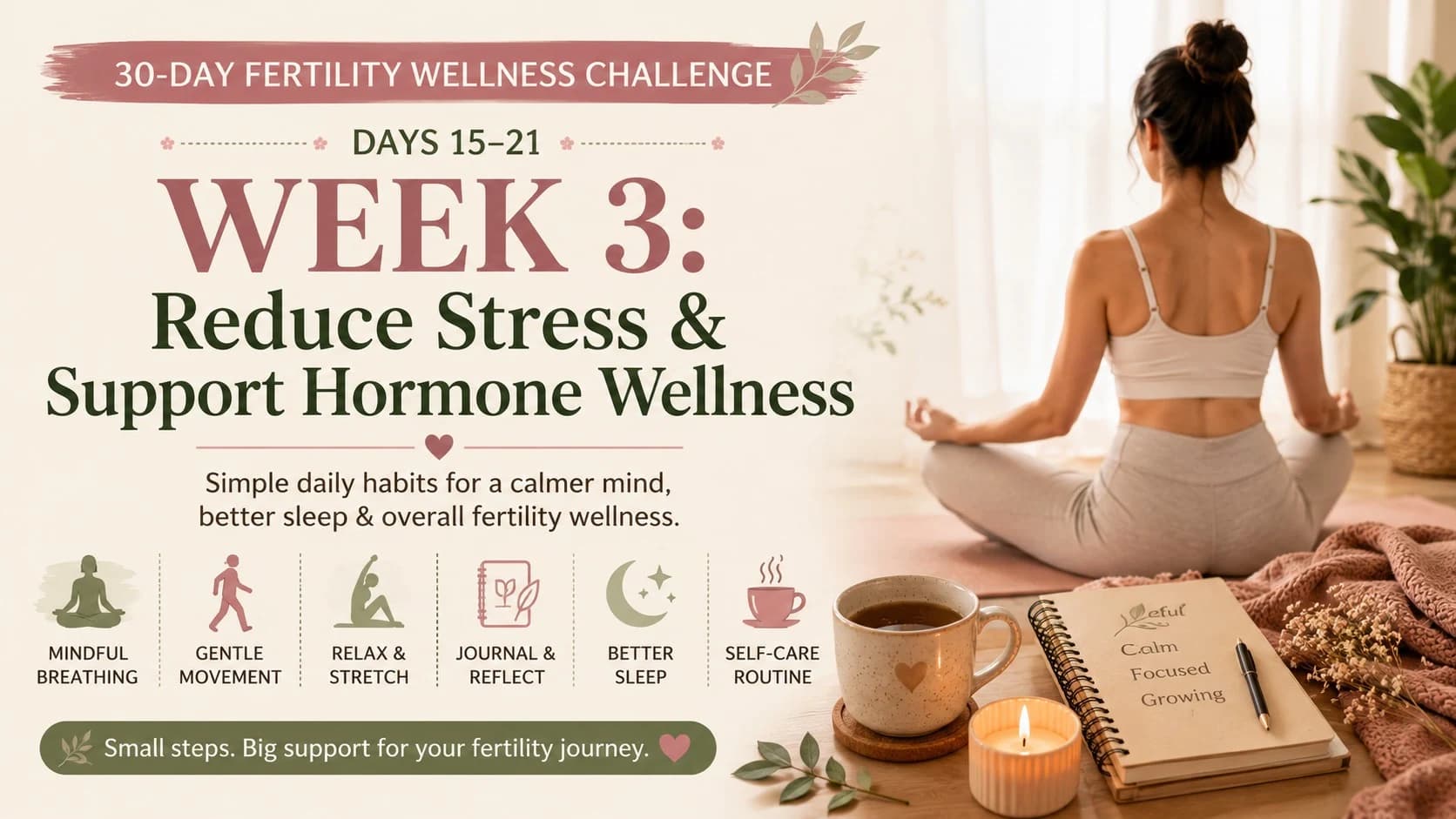
Gentle Ways to Support Lower Cortisol Naturally
1. Try the 4-7-8 Breathing Technique
This calming breathing pattern may help activate the parasympathetic nervous system.
How to do it:
Inhale for 4 seconds
Hold for 7 seconds
Exhale slowly for 8 seconds
Even one minute can feel grounding during stressful moments.
2. Swap Intense Workouts for Restorative Movement
High-intensity exercise can be wonderful for some people, but excessive intense cardio may increase stress load in certain situations.
Gentle practices like:
restorative yoga
walking
stretching
pilates
mobility work
may feel more supportive during high-stress seasons.
3. Morning Sunlight Exposure
Getting natural sunlight within the first 30 minutes of waking may help support:
circadian rhythm balance
cortisol rhythm regulation
sleep quality
hormone health
Even 5–10 minutes outdoors can help.
4. Create Magnesium-Rich Evening Rituals
Magnesium plays a role in relaxation and nervous system support.
Soft calming rituals may include:
Epsom salt baths
magnesium-rich foods
herbal tea
screen-free evenings
low lighting
This fits beautifully into a gentle “soft girl wellness” approach that prioritizes calm over constant productivity.
5. Protect Your Sleep
Sleep is one of the most important foundations for hormone health.
During sleep, the body supports:
repair
hormone regulation
stress recovery
nervous system restoration
Try creating a calming evening routine that helps your body feel safe enough to deeply rest.
A Soft Girl Wellness Routine for Hormone Balance
Morning
natural sunlight
warm nourishing breakfast
gentle stretching
slower mornings when possible
Afternoon
protein-rich meals
hydration
nervous system breaks
less overstimulation
Evening
magnesium bath
calming skincare
journaling
restorative yoga
earlier sleep
Sometimes healing starts not with pushing harder — but with softening.
Final Thoughts
Your body is not working against you.
It is constantly trying to protect you.
If stress has been affecting your cycle, energy, skin, or overall wellbeing, it does not mean your body is “broken.” It may simply be asking for more safety, rest, nourishment, and support.
Healing hormones often begins with creating an environment where the nervous system no longer feels stuck in survival mode.
And sometimes, the most powerful thing a woman can do for her hormones is slow down enough for her body to finally exhale.